
Commute
Measure the route at the time and on the days you expect to travel.
Use a map pin to start your research. Then use online sources and a short-term base to test your commute and Tuesday evening with a simple field routine.
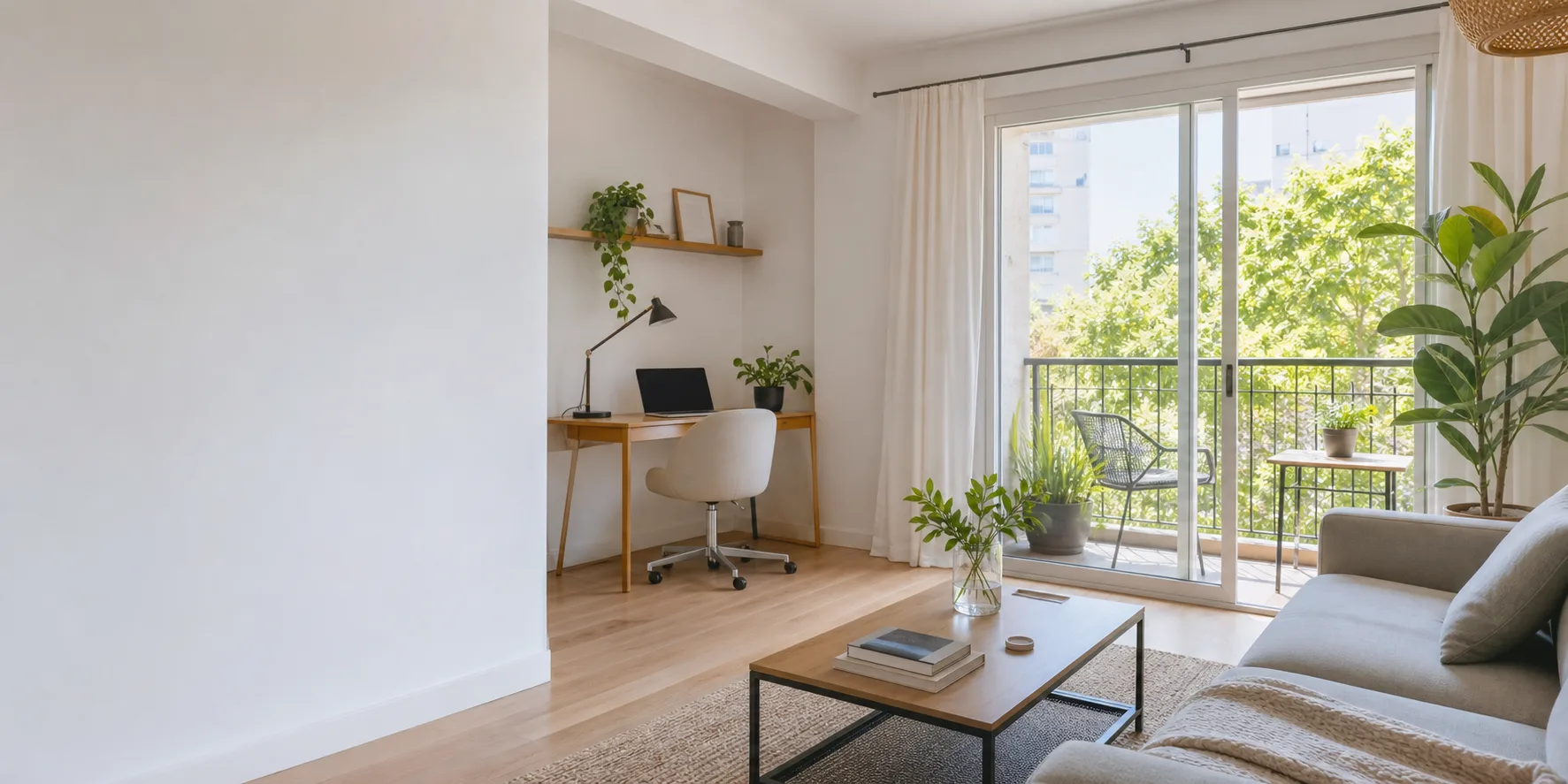
Start with behavior. Compare the block against your commute, schedule, and daily needs.
Measure the route at the time and on the days you expect to travel.
Check the walk, opening hours, delivery options, and the ordinary errands you will repeat.
Look at the route, transfers, service hours, and the walk between the stop and the building.
Test the block and building at the hours when you need calls or focused work.
Return at different times and record each impression.
Understand the entrance, keys or codes, stairs or lift, deliveries, and arrival process.
Use this worksheet to: observe your routine and consult current local guidance. Use the furnished base to test logistics and local sources to check safety.
Different sources answer different questions. Record the source and date beside each observation, then choose what to visit.
Write the places you will visit, the times you will travel, and the errands you need close by.
Use transit operators, maps, shop pages, and building or host information to verify the details each source covers.
Check transfers, weather, bags, and late returns alongside the map route. Compare more than one departure time.
Use past guest comments for context about noise, access, or nearby conveniences. Check current conditions during your visit or with current local guidance.
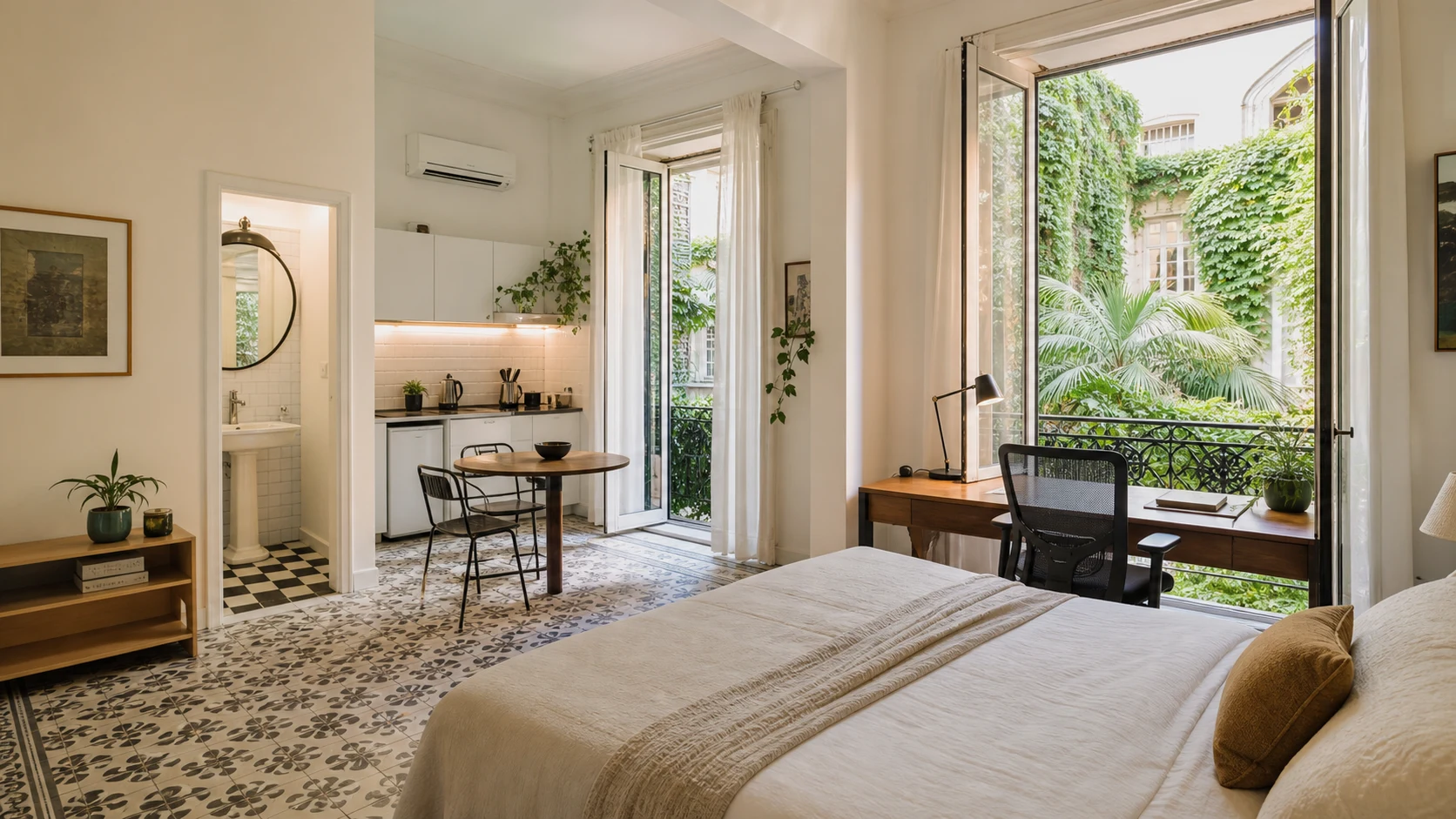
Choose a furnished stay where you can sleep, work, cook, reach essentials, and return to the building at different times. Treat questions about the neighborhood separately from questions about the stay.
Treat one visit as one signal: record a quiet afternoon, an easy route, or a helpful review. Compare several observations before making a longer commitment.
Use the same routine at each candidate base. Record what you observe and the questions you need to answer.
Travel the route at your usual departure and return times.
Walk to a store or market, check what you can carry, and note opening hours.
Use the stop or station, including the walk back to the building.
Spend a focused block of time listening from inside the stay and on the street.
Repeat a short walk at different times and record each result.
Try the entrance, keys or codes, stairs or lift, and delivery handoff if the host allows it.
Write each observation, source, and follow-up while the details are fresh. Use them to choose the next question and compare several times and locations.
| Priority | What to record | Follow-up |
|---|---|---|
| Commute | Time, transfers, walking, and how the route felt. | What changes on a different workday or return time? |
| Essentials | Nearest groceries, pharmacy, cafés, and opening hours. | What will you do when the closest option is closed? |
| Workday | Noise, light, workspace, and call privacy during your hours. | Which detail needs a host answer or another visit? |
| Evening/weekend | What you noticed at more than one time of day. | What will you test again before a longer move? |
| Building | Entrance, access method, stairs or lift, and deliveries. | Which arrival or daily-access details need another check? |
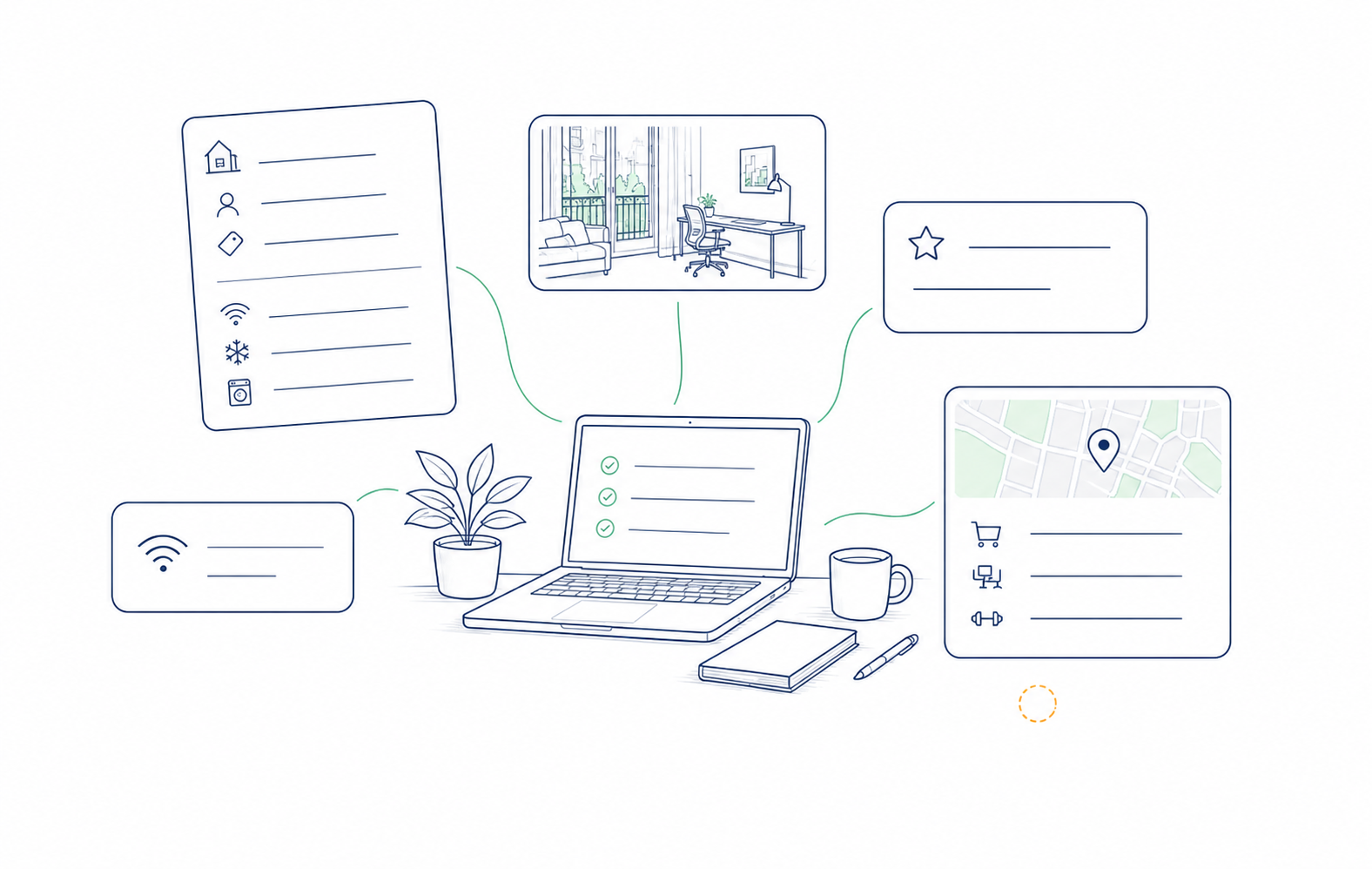
Casamo covers 2–8 week Airbnb and Booking.com listings. Add 2–10 links or a destination to compare listing text, explicit amenities, photos, and recent reviews against the requirements for your furnished base.
Use the report for the furnished base: compare listing details, then evaluate the neighborhood, current conditions, and safety for yourself before you book.
Use the next guide to check a month-long stay or compare the accommodation models that fit your move.